Learn about us.

Marc Gold & Associates (MG&A) is a network of consultants who specialize in employment and community participation training for service providers and persons with significant disabilities. MG&A was founded in 1976 by Dr. Marc Gold, a professor at the University of Illinois, to provide consultation, staff training, and project management to systems, organizations, families, and individuals with disabilities throughout the U.S. and Europe. 


Following Dr. Gold's death in late 1982, a group of employees purchased the company from his estate. The company has since evolved into a dynamic network that continues to provide cutting-edge information and capacity to the disability field. Michael Callahan helmed this Mississippi-based organization beginning in 1983. MG&A is now based in Northern Virginia, under the leadership of Therese Fimian.

Click any button below to explore more of MG&A's history of work in the field of disability employment training.


About 
Dr.
Marc
Gold

Learn about
MG&A’s founder
and his legacy.
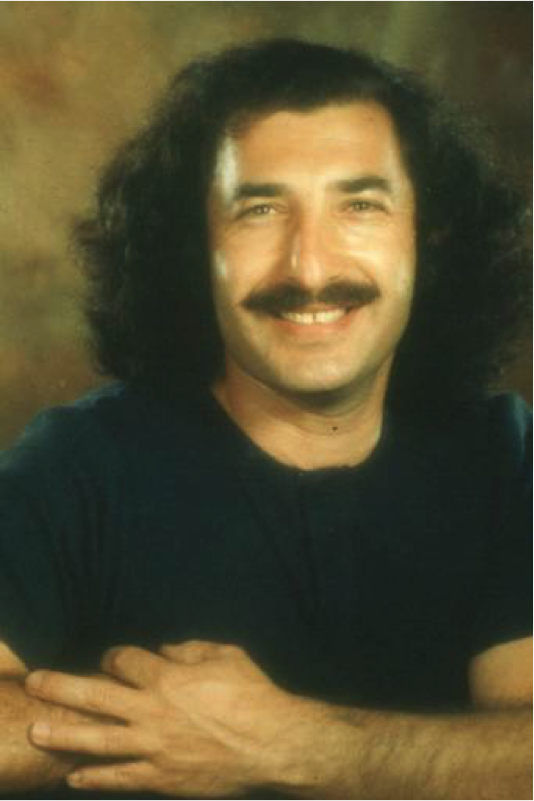
During the late sixties, Marc Gold—then a special education teacher in East Los Angeles—began to formulate a conceptual framework of instruction based on a few fundamental beliefs:
  • Students with significant disabilities have much more potential than most people assume;

  • All persons with disabilities must have the opportunity to live their lives as they choose to, in pursuit of their own goals and interests; and

  • Everyone can learn if we can figure out how to teach them.
These beliefs led Marc to formalize a system of teaching skills to persons with severe disabilities, especially people labeled “mentally retarded,” by the jargon of the time. By the early seventies, Marc was teaching at the University of Illinois in Champaign-Urbana, and lecturing throughout the United States and Canada. He presented three day workshops on a new systematic training approach called Try Another Way. This system provided a values-based organizational framework and instructional strategies for teaching persons with even the most significant disabilities to perform sophisticated tasks. The professional literature of the human service field during the mid 1970's contains a rich collection of Marc's research validating his approach and the belief that all people can learn. Based on this success, Marc founded a company that would focus on Try Another Way and Employment Services: Marc Gold & Associates.

Marc passed away from lymphoma in 1982 at 43 years old, but his legacy lives on through MG&A. His contributions to the disability field have been honored by TASH, of which he was a founding board member, in the form of the Marc Gold Employment Award. This award is presented annually to an individual who has contributed significantly to increased access to community and integrated employment for persons with significant disabilities.

For more, please see “The Legacy of Marc Gold,” a presentation by Michael Callahan

The Fifty-Year History of MG&A

Click any tab below to explore the work of Marc Gold and Associates by decade.

The 1970s
The 1980s
The 1990s

The 2000s
2010 - 2015
2016 - Present

The 1970s

1976 MG&A was formed by Marc Gold at the request of Ed Roberts to conduct training in California.
A photograph of Dr. Marc Gold., circa 1976
Dr. Marc Gold, circa 1976
1978 Georgia Project started (two-year duration).
1979 Ohio Project started (four-year duration).


Founded in 1976 by Dr. Marc Gold, MG&A has provided quality training, consulting, grant management, and advocacy services designed to assure the complete community access of all individuals with disabilities. The primary areas of focus of MG&A for nearly five decades have been Systematic Instruction, Customized and Supported Employment and community access.

Upon seeing a training demonstration by Dr. Gold at a conference in Los Angeles, Ed Roberts (director of vocational rehabilitation services in California; later the founder of the World Institute on Disabilities), asked Marc to start an organization that could train service providers throughout that state. This marked the origins of MG&A. Following statewide training projects in the late 1970's in California, Georgia, and Ohio, MG&A shifted its focus to employment.

Projects in California, Georgia, and Ohio represented an intensive system change effort, in which MG&A trainers and mentors worked to build capacity to implement the “Try Another Way” approach.

The organization, under Dr. Gold's guidance, joined other innovators to pioneer early examples of supported employment beginning in 1979 and continuing into the next decade.

The 1980s

1980 Marc Gold contracts lymphoma and begins treatment.
1981 Mississippi Project was started – one-year CETA-funded employment project.
1982 Marc Gold dies on December 22, 1982.
1983 MG&A was purchased from Marc’s estate by eight former employees as a “C” corporation.
Getting Employed, Staying Employed was published by Brookes Publishing.

Michael Callahan (along with Brad Garner and Cavin McLoughlin) was co-editor of Keys to the Workplace, the first “how-to” text on supported employment.

Early work on the Vocational Profile Strategy – the approach that would later become known as “Discovery” – was initiated.
1988 MG&A began using the term “Negotiated Supported Employment” and developed a process that would later be referred to as Customized Employment.

Michael Callahan and MG&A began a 13-year partnership with United Cerebral Palsy Associations, lasting until 2000.
Highlight: The Motorola Project

The Motorola Project was started in Austin, Texas in 1980. It served as the first commercial workplace implementation of Try Another Way. Five additional large corporations (including IBM, Abbott Labs) joined this Comprehensive Employment and Training Act (CETA) -funded employment initiative between 1980 – 1982. MG&A trainers worked on company production floors to include PWDs in their workforce, and some aspects of the approach began to be included in training strategies for all employees.


Marc Gold contracted lymphoma and died unexpectedly in late 1982. Eight members of the organization purchased the rights to the name and intellectual property of MG&A in 1983 and the next phase of the organization began with Michael Callahan as president.

During the 1980's MG&A focused primarily on training an amended version of Dr. Gold's Try Another Way approach to systematic instruction. New associates were added as the employment field shifted from demand-based supported employment to negotiated customized employment.
A photograph of Michael Callahan
Michael Callahan, President Emeritus of MG&A.

The 1990s

1990 The Vocational Profile Strategy, that would later become known as “Discovery,” is included as a foundational service concept in the federally-funded staff project by UCPA, the Self-Directed Staff Training Project (SDST). This project trained hundreds of employment service staff in three states.
1992 MG&A conceptualized the Seven Phase Sequence.
The seven-phase sequence helps identify natural ways, means and people, then facilitate and/or provide instruction in a manner appropriate to each individual and environment.
1996 MG&A coined the term “Discovery” to replace the phrase “Vocational Profile Strategy.”

1997 Michael Callahan and Brad Garner authored Keys to the Workplace, a text that included information on Discovery and systematic instruction in workplaces.


During the 1990s, MG&A forged new pathways to employment for individuals with the most significant disabilities. Having developed the concept of the vocational profile while at Syracuse University in the 1980's, Callahan and his colleagues developed the Discovery process as an alternative to traditional comparative assessment procedures that often excluded individuals the significant disabilities from employment. Shortly thereafter, Callahan and others at MG&A worked to create a system to develop negotiated, customized jobs in the community.
MG&A continued to expand across the nation. MG&A worked extensively in Texas to assist the state agency serving persons with intellectual disabilities to reform its employment services in anticipation of a state-wide Medicaid waiver. MG&A partnered with United Cerebral Palsy Associations to implement national initiatives in the areas of personal budgets, self-determination and utilizing the emerging workforce system as a viable source of support for employment for individuals with intellectual and developmental disabilities.

"The Customized Employment Training with Marc Gold & Associates is truly unique. The training is unique because of the passion, knowledge, and expertise their trainers bring into training and mentoring employment specialists, whether that is in a classroom or virtually. Customized Employment provides a new avenue for job seekers to pursue their aspirations in employment that is not only exciting, but successful.”

— Brian Dean, Program Developer & Trainer

The 2000s

2000 MG&A formed a non-profit entity, Employment for All. New associates joined MG&A as a result of this partnership.
2001 The newly-formed Office of Disability Employment Policy (ODEP) coins the term “Customized Employment” and suggests that an “individualized determination of the strengths, needs, and interests of the person with a disability” be used to guide employment services. This “determination” was a generic way of describing the Discovery process: an MG&A strategy.
Highlight: The Youth School-To-Work Transition Project (2003)

The US Social Security Administration contacted the Mississippi Department of Rehabilitation Services with an offer to fund a major Youth Transition Demonstration if MG&A would be included in both the management and technical assistance. This six-year initiative allowed MG&A to embed customized employment and systematic instruction strategies within a nationally-significant transition projects for students with significant disabilities.
2009 Held the Inaugural Discovery Retreat in Ocean Springs, Mississippi.


The decade of 2000-2010 saw a continuing development of concepts designed to enhance access to employment for all persons with disabilities. MG&A worked with the states of Alaska and Michigan to implement their projects funded by the Office of Disability Employment Policy (ODEP) on Customized Employment.

MG&A also served numerous other sites as a technical assistance provider for the National Center on Workforce and Disability, the national technical assistance center for the ODEP Customized Employment projects. During the following years, MG&A emerged as a clear leader in developing and then training concepts that would enhance access to employment through CE.

Beginning in 2007, MG&A began to work with several states on their Medicaid Infrastructure Grants (MIG), particularly in Wisconsin and New York where statewide initiatives on Customized Employment have been developed with MG&A's assistance. MG&A then joined the Southeast (Technical Assistance and Continuing Education) TACE to provide employment training and consultation to the state rehabilitation agencies in the eight states in the southeast region of the TACE network. In December of 2011 MG&A in coordination with Southeast TACE implemented a Transition Conference within the TASH conference. The conference was also live streamed so that vocational rehabilitation staff, providers and families were able to attend both in person and virtually.


Since launching its annual Discovery retreat, MG&A has facilitated a nationwide discourse on Discovery, Customized Employment, and the effective implementation of the processes. Attendees are provided updated information such as discussion papers, forms, PowerPoint presentations and "how to guides" for various aspects of the Discovery and Customized Employment process. This information allows attendees to effectively implement Customized Employment approaches when they return home in a manner consistent with best practices. 
 
During the Discovery retreat, MG&A consultants also meet to review current projects, training materials and discuss how to ensure that all information is presented in a cohesive and consistent manner. 

Throughout the decades, however, a common thread for MG&A's services has been systematic instruction based on Gold's Try Another Way approach. This timeless strategy remains critical to the success of all employment efforts for persons with significant disabilities. MG&A is the lone steward of Marc's enduring work on instruction. The core concepts have been continually, but carefully, updated to reflect the most effective and respectful means to assist individuals with disabilities to perform critical tasks in a quality manner.
Highlight: Performance-Based Certification

MG&A developed performance-based certification in response to the need to have a more robust instructional approach to Customized Employment and Systematic Instruction services. Participants are provided a mentor to assist them with feedback and guidance as they conduct the actual performance of the Discovery, Customized Job Development or Systematic Instruction processes.

2010 - 2015

2010 MG&A was contracted by University of South Florida to develop a webinar-based certification for university students.
2012 MG&A was contracted by SourceAmerica to provide training and technical assistance for the Pathways to Careers initiative, a paid internship-to-work project focusing on Customized Employment outcomes.
Developed an in-house performance-based certification program for Discovery.
2013 Began offering performance-based certification in Discovery in Pennsylvania contracted by the Arc of Pennsylvania.
2014 Developed an in-house performance-based certification program for Customized Job Development.

Began offering performance-based certification in Customized Job Development in Pennsylvania and in various locations across the US.
2015 Developed an in-house performance-based certification program for Systematic Instruction and Job Site Supports.Began offering performance-based certification in Systematic Instruction and Job Site Supports in Pennsylvania and various locations across the United States.

2016 - Present

2016 Received a contract from WINTAC and Y-TAC technical assistance centers to develop a draft for the Essential Elements of Customized Employment.


Received ACRE status for certification in Supported Employment.
2017 Developed the Essential Elements of CE for WINTAC and Y-TAC.
2018 Held the 10th Annual Discovery Retreat in Ocean Springs, Mississippi.

Received ACRE status for certification in Customized Employment.
2019 Announced a multi-year transition of ownership of MG&A from Michael Callahan to Therese Fimian.
2020 MG&A began offering virtual training in the wake of the COVID-19 global pandemic.
2022 Therese Fimian took ownership of MG&A from President Emeritus Michael Callahan.
MG&A President Therese Fimian
Therese has worked in the disability employment field for over 20 years, overseeing national workforce, research, and demonstration projects, in addition to programs to increase access to employment—and economic and professional empowerment—for individuals with significant disabilities.


For eight years, Therese directed a national initiative through which several hundred customized employment positions were created, and hundreds of strong partnerships with businesses were established.

Throughout her entire career, she has worked with national and state agencies to develop and improve strategy, policy, and practice to increase interest in (and access to) resources and services that result in competitive, integrated employment for individuals with disabilities. These efforts required the improvement of employment services, incorporation of financial and benefits planning, and increased access to assistive technologies.

Therese joined MG&A as an associate in July 2019, and assumed its presidency along with ownership of the organization in 2022.

“While MG&A’s approach to Customized Employment establishes the defined process, it is flexible enough to tailor it to the job seeker’s talents and interests. The training is clear, concise, and thorough, which provides an excellent base of knowledge for staff to follow while allowing the job seeker to fully participate in the process. Staff gain confidence in not only discovering the job seekers strengths, abilities and interests but also in their approach with employers. I can’t begin to describe how much it has benefited the job seeker, staff and community.”

— Nanette Cohen, Director of Duman Opportunity Center

President Emeritus Michael Callahan

Michael's passion for disability services began at a young age. After graduating from high school in the mid 60’s, he was recruited to work as a summer water safety instructor for ARC of Hinds County, MS. Though he had no previous experience working with people impacted by disabilities, he quickly began to empathize with the difficulties he witnessed many of the campers facing. He identified so many wrongs to be righted and people to be understood not only within the camp, but also in regard to the societal perception of those impacted by significant disabilities as a whole. 

Michael moved on to attend the University of Southern Mississippi and earned a degree in Sales Management. He returned to ARC of Hinds County each summer as a water safety instructor and continued to develop an understanding of the world of disability. After graduating, he began working as a special education teacher and a federal funds administrator in Mississippi through 1972. He continued to make strides in the disability field directing a camp for deaf and blind children, starting the first group home in Mississippi for people with disabilities coming out of a state institution, and running a sheltered workshop that employed people with disabilities.

In 1976, Michael met Marc Gold and immediately connected with the work Marc was doing through Marc Gold & Associates. It wasn’t until 1979, however, that he became an official employee of MG&A working on an early project in Ohio. Marc and he worked together for the following three years and developed a close relationship that enabled him to fluidly and successfully fill the role of president of MG&A following Marc’s untimely death in 1982.

Since then, Michael has consulted throughout the US, Canada, and Europe in the area of supported employment. He received a doctorate degree from Syracuse University with a focus on vocational rehabilitation.
Michael edited a popular "how-to" book on employment for persons with severe dis­abilities, Getting Employed, Staying Employed (1987) and co-authored of ­Keys to the Work Place (1997) a text on systematic instruction and natural supports in supported employment. Over the years, he has published numerous articles, chapters, manuals, and curricula pertaining to employment of persons with disabilities.He played a fundamental role in the development of customized employment, and helped to establish terminology that is widely used in disability employment to this day including the term “Discovery.”

Michael also worked with United Cerebral Palsy Association's (UCPA) from 1987 - 2000. He directed a Department of Labor grant, One-Stop to Success, which offered persons with significant disabilities access to services in generic one-stop employment centers. He is also the former director of the Choice Access Project, a six-year project that examined the feasibility of providing direct vouchers to persons with severe physical disabilities and for them to purchase the employment services of their choice. He managed the UCPA’s Research and Demonstration Project on supported employment and the UCPA Self-Directed Staff Training Project for Supported Employment, a pilot project to test the feasibility of an individualized, competency-based curriculum for staff development as well as the UCPA National Demonstration Project for Supported Employment in the late 80's. These projects employed hundreds of persons with significant physical disabilities using individualized supported employment.

After decades of groundbreaking contributions to the disability employment field, Michael retired as president of MG&A late in 2021 but continues to train and provide consulting services for the organization. He currently lives in Ocean Springs, Mississippi.

For more, please see “The Timeline of Discovery”